
Key Takeaways
- Lymphatic drainage massage uses very light, rhythmic strokes to help move excess fluid toward your lymph nodes. It doesn’t work on muscle.
- It’s most often used for swelling after surgery and for lymphedema, but many people book it simply because it’s so calming.
- Research supports it as a safe add-on for some kinds of swelling. It’s not a detox cure or a fat-loss treatment.
- Results tend to build over several sessions rather than one.
- If you’ve had surgery, get clearance from your surgeon first. People with blood clots, active infection, or certain heart and kidney conditions should skip it or ask their doctor.
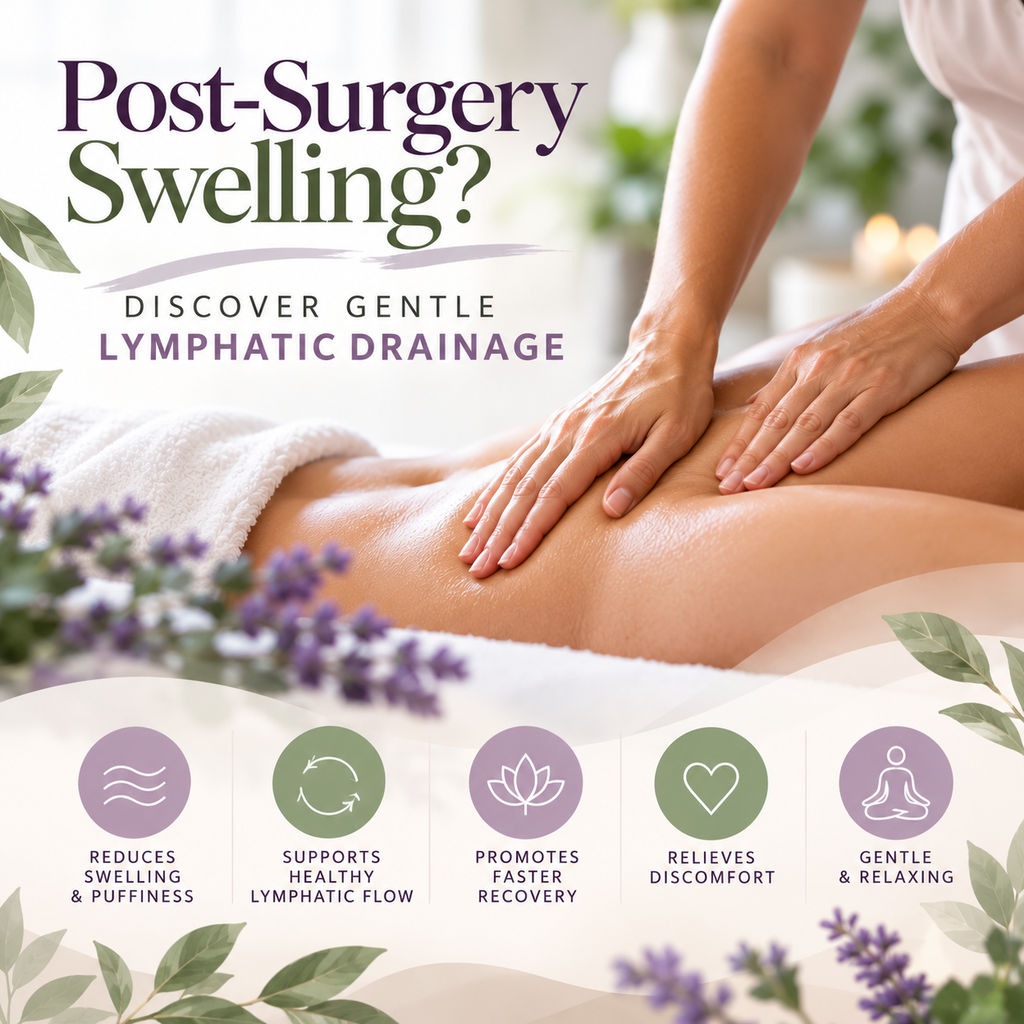
A Gentle Massage With a Very Specific Job
Lymphatic drainage has had a moment on social media. You’ve probably seen the before-and-after clips promising a flatter stomach, a sharper jawline, or a full-body “detox” in one session.
Some of that is real, but a lot of it isn’t.
At Lavender Skin Therapy, lymphatic drainage has quickly become one of the most requested services on our massage menu, so we get plenty of questions about what it actually does. Here’s a straight answer, based on how the lymphatic system works and what the research shows.
How Your Lymphatic System Works
Your lymphatic system is a network of vessels and nodes that collects extra fluid from your tissues and returns it to your bloodstream. It’s also closely tied to your immune system, since lymph nodes help filter that fluid.
But here’s the catch: your blood has a heart to pump it. Lymph doesn’t.
According to MD Anderson Cancer Center, lymph moves mainly through muscle contractions, body movement, and deep breathing. So when movement drops (say, while you’re recovering on the couch after a procedure) or when lymph nodes have been removed or damaged, fluid can build up in the tissues. That’s the swelling people come to us about.
What Lymphatic Drainage Massage Actually Does
In plain terms, it helps the body clear fluid that’s sitting where it shouldn’t be.
It Moves Fluid, Not Muscle
Lymphatic drainage (often called manual lymphatic drainage, or MLD) uses slow, very light strokes that gently stretch the skin in the direction lymph naturally flows. Many of the small lymph vessels sit just under the skin. So heavy pressure isn’t the goal, and that’s why this massage feels nothing like deep tissue work.
If you’re used to a firm session like our Signature Customized Massage, the lightness can be surprising. Plenty of people fall asleep.
It Follows a Specific Order
Lymphatic drainage isn’t random. Cleveland Clinic explains that a session typically starts by working areas with lymph nodes, like the neck and armpits, before using light pressure to guide fluid from the swollen area toward those nodes. Think of it as clearing the drain before you send water toward it.
That sequence is a big part of why training matters. A therapist who just rubs lightly over a swollen spot isn’t doing the same thing.
What the Research Says (and Doesn’t)
The strongest evidence is for lymphedema, which is chronic swelling that can happen after lymph nodes are removed or damaged. A Cochrane review on manual lymphatic drainage after breast cancer treatment found MLD is safe and well tolerated, and that it may offer added benefit to compression bandaging for reducing swelling, mainly in mild-to-moderate cases. The reviewers also noted the trials were small and findings on range of motion were mixed.
What about the viral claims?
Lymphatic drainage moves fluid. It doesn’t remove fat, and it isn’t a substitute for your liver and kidneys, which handle most of what people mean by “detox.” When someone looks slimmer right after a session, that’s generally less fluid and less puffiness, not less body fat.
None of that makes it less useful, as long as your expectations match what it really does.
Who Tends to Benefit Most
After Cosmetic or Plastic Surgery
This is the most common reason clients come to us. After procedures like liposuction or a tummy tuck, swelling is a normal part of healing, and many surgeons recommend lymphatic massage as part of recovery. MASSAGE Magazine notes that sessions should only begin with surgeon approval, which may be anywhere from a few days to a couple of weeks after surgery depending on the procedure.
Lymphedema
People living with lymphedema often get lymphatic drainage as one part of a care plan that may also include compression garments and exercise. If that’s you, your medical team should be guiding the overall plan.
Everyday Puffiness and Relaxation
Some people just notice swollen ankles after a long flight or a lot of time on their feet. Others love the slow, quiet rhythm. Both are fine reasons to book, as long as there’s no medical reason to hold off.
When to Skip It or Wait
Lymphatic drainage isn’t right for everyone. Cleveland Clinic lists several conditions where it generally isn’t recommended:
- Blood clots or deep vein thrombosis
- Cellulitis or other active infections
- Fever
- Heart disease or kidney failure
- A history of stroke
Providers also won’t massage directly over cancerous tissue or skin damaged by radiation therapy. And if you’ve had surgery recently, we require clearance from your surgeon or medical provider before your first post-surgical session. Our spa policies also ask you to share recent procedures and medications at intake.
How Many Sessions Do You Need?
There’s no single number, and anyone who promises one is guessing. Cleveland Clinic notes that results may not be immediate, which matches what we see: in most cases, people get more out of a series than a single visit.
Generally speaking, it breaks down like this:
- Post-surgery recovery: More frequent sessions in the first few weeks after you’re cleared, then spaced out as swelling settles. Your surgeon’s protocol comes first.
- Ongoing puffiness or wellness: Sessions every couple of weeks, or monthly, depending on how you feel.
That’s the main reason we offer lymphatic drainage as a package. Like our other treatment packages, packages are valid for 12 months and non-transferable, so you’ve got room to space visits the way your recovery needs.

Lymphatic Drainage in Glenwood Springs With Tami Bell
Who’s doing the work matters a lot with this technique.
Tami Bell, LMT, BCTMB, joined our team with 20 years of massage experience, including time at Spa of the Rockies here in Glenwood Springs and in Snowmass Village. She’s certified in advanced lymphatic drainage techniques and in kinesiology taping. She’s also board certified in therapeutic massage and bodywork, a credential that, according to the NCBTMB, requires passing the Board Certification Exam and a background check on top of state licensure in licensed states. You can read her full background on our Meet the Team page.
Book a Lymphatic Drainage Session
Curious whether lymphatic drainage fits your recovery or your routine? Contact Lavender Skin Therapy to book with Tami or ask which package makes sense for you. You can also call or text 970-319-5200. We’re at 1512 Grand Ave, Suite 108, in Glenwood Springs, with free parking right outside.
Frequently Asked Questions
What does lymphatic drainage massage do?
It uses light, rhythmic strokes to help move excess fluid out of the tissues and toward the lymph nodes. It’s mainly used to reduce swelling.
Does lymphatic drainage help you lose weight?
No. It can reduce fluid and puffiness, but it doesn’t remove body fat.
How soon after surgery can I get lymphatic drainage?
Only after your surgeon or medical provider clears you. Depending on the procedure, that may be a few days to a couple of weeks after surgery.
Does lymphatic drainage massage hurt?
It shouldn’t. The pressure is very light, and most people find it relaxing.
How often should you get lymphatic drainage?
It depends on why you’re getting it. After surgery, sessions are often closer together at first. For general wellness, every couple of weeks or monthly is common.
Is lymphatic drainage the same as a regular massage?
No. Regular massage works on muscles, while lymphatic drainage targets fluid just under the skin. For a look at other styles, see our guide to massage types and their benefits.
Disclaimer: This article is for general educational purposes only and isn’t medical advice. Lymphatic drainage massage doesn’t diagnose, treat, or cure any medical condition, so always follow your surgeon’s or physician’s guidance and get medical clearance before booking post-surgical massage.